

Growing koji can take different paths depending on what you're using it for, the strain of spores, and the base (or substrate) you’re growing it on. The key is to create the right environment so those little spores can thrive. In this guide, we’ll walk you through a home-friendly method to grow koji. But don’t get too attached to these numbers—depending on your spores, substrate, or goals, these conditions can vary.
Note: This guide assumes you’re already familiar with koji basics—like what Aspergillus oryzae is, and how koji spores work. If not, head over to our "What is Koji?" article first.
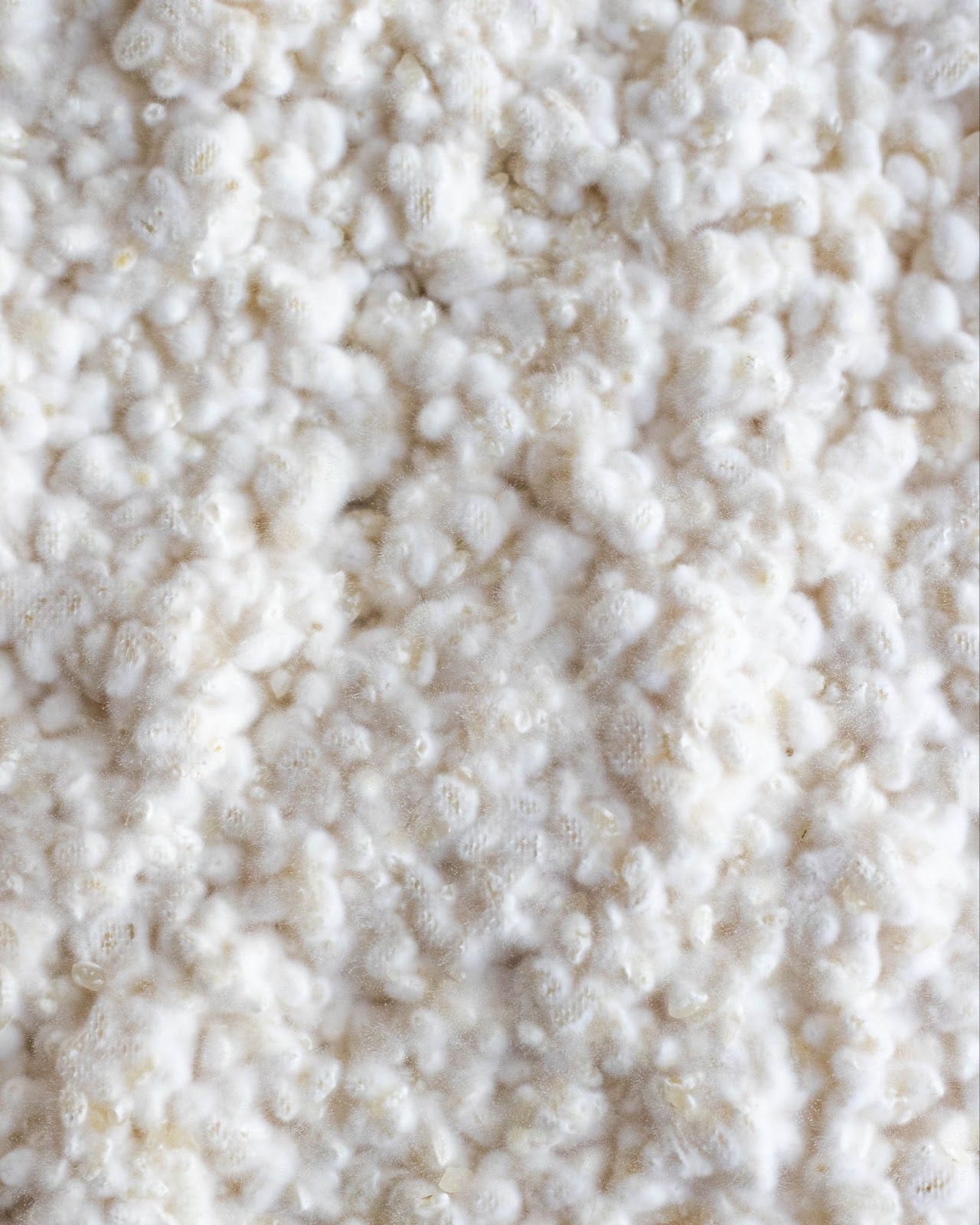
What Koji Needs to Thrive
Temperature: Most strains of Aspergillus oryzae like temps between 32°C and 37°C. Higher temps push spore growth, while lower temps hold it back a bit. For home-growing, stick close to 30°C and you’ll be golden.
Oxygen: Koji needs airflow. Without it, the mold gets suffocated and growth slows. Regular stirring and maybe even a small fan can help.
Humidity: Keep things humid to prevent drying out, but not too wet. Koji loves a well-moisturized environment but doesn’t want to swim.
Nutrients: A nutrient-rich substrate like rice is perfect. Finer grains grow slower, so choose wisely depending on your project.
Essential Equipment for Koji Growing
Creating the perfect koji habitat can be as high-tech or low-tech as you like. Here's what you'll need:
Heater: To keep that cozy 30°C.
Humidifier: For steady moisture.
Temperature Controller: To stay on top of the heat.
Humidity Controller: Because koji likes it humid but not too damp.
Chamber: You can get creative here. A Styrofoam box is a solid home option for holding in heat and humidity.
Temperature Guidelines for Koji Cultivation
The ideal growing conditions depend on your substrate (rice, beans, etc.) and what you want to make. Here’s a quick cheat sheet — these are by no means rules, just common patterns:
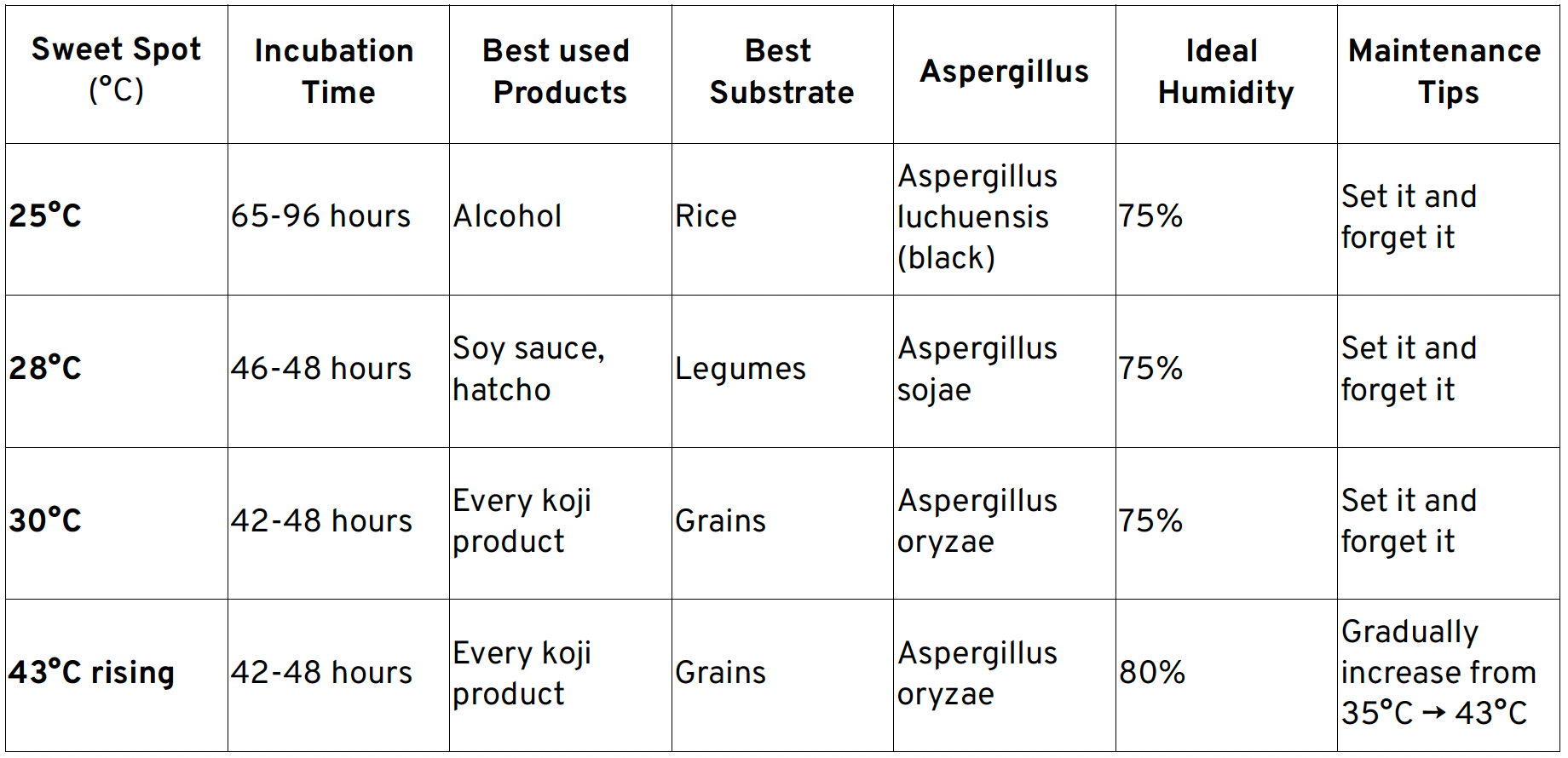
For now, we’re keeping it simple with what we think is the most straightforward method: 30°C with rice as a substrate. This beginner-friendly technique is versatile and works for most koji-based products. Once you’re comfortable with it, we’ll tackle more advanced methods and sprinkle in some Japanese terminology to expand your knowledge.
Step-by-Step Guide to Growing Koji at 30°C
Step 1: Prepare the Rice
Soak rice overnight, rinse, and steam it until just done. The grains should be soft but not soggy—think "al dente" for rice. Over-steaming can lead to too much moisture, which spells trouble for your koji.
Once steamed, let the rice cool down to around 28°C (82°F). Hitting exactly 30°C can be tricky at home, so aim for 28°C—by the time it’s all mixed, it should even out.
Step 2: Inoculate the Rice
Spread the cooled rice on a tray, then sprinkle your koji spores evenly over the surface. Get in there (with gloves, of course) and mix it thoroughly, making sure every grain gets some spore love.
Smooth the rice into an even layer and cover it with a cloth to maintain moisture.
Step 3: Set Up the Chamber
Place the tray in a chamber (a DIY setup with a heater and humidifier works just fine) at 30°C and 75% humidity. You’re officially on koji watch duty now! Here’s a typical timeline:
Monitoring Timeline
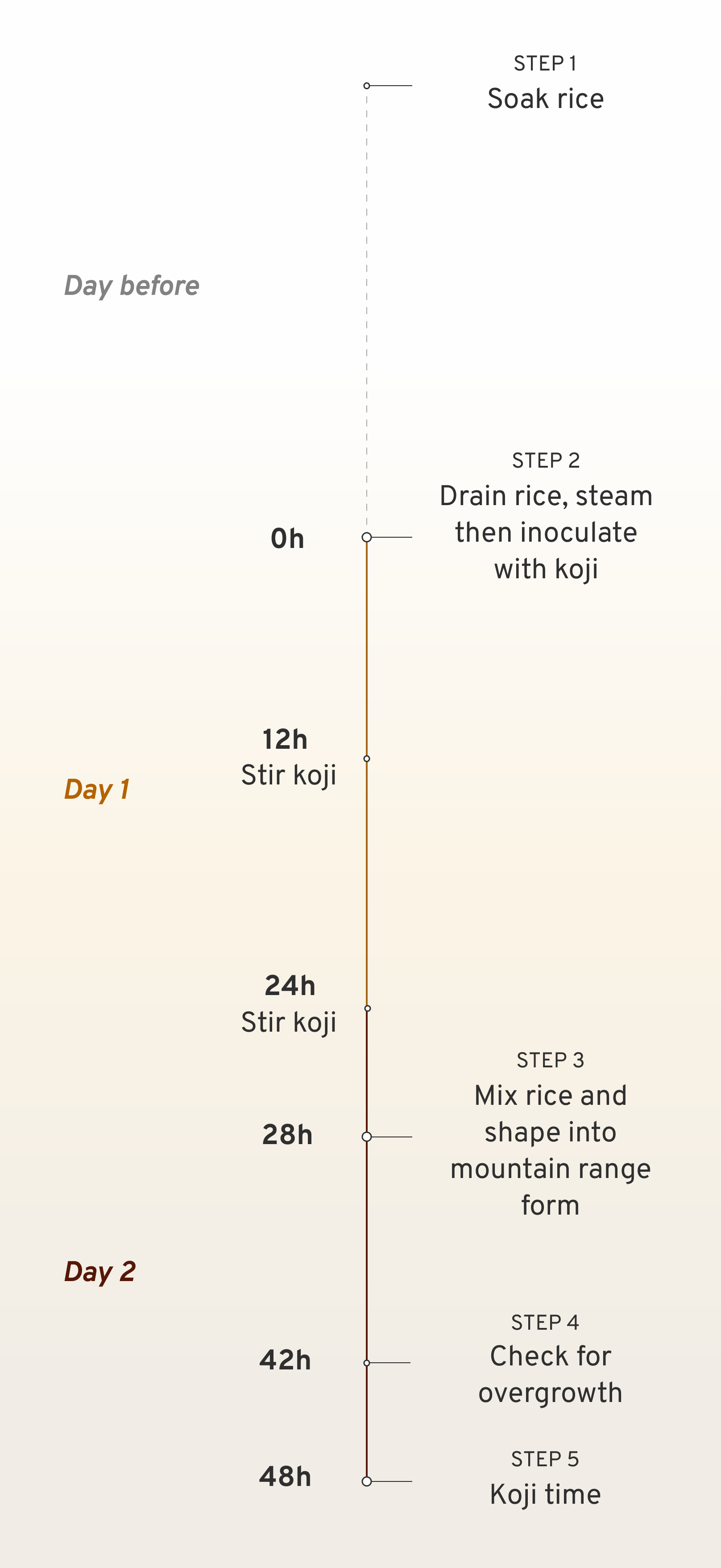
Hour 0 (Day 1, 20:00): Rice is mixed with spores and tucked into the chamber. Follow the spore packet’s instructions on quantity—about a tablespoon usually does the trick.
Hour 24 (Day 2, 20:00): Stir the rice and reshape it into a mountain range-like formation to improve air circulation. You might notice a faint koji smell, which is a good sign!
Hour 36 (Day 3, 08:00): Check for growth. You should start seeing some white fuzz creeping in.K
Hour 42 (Day 3, 14:00): Keep an eye out for overgrowth. White is what you want—green, not so much. If there’s some green, don’t panic; just scrape it off. If the rice looks fully covered in white mycelium, your koji might be ready.
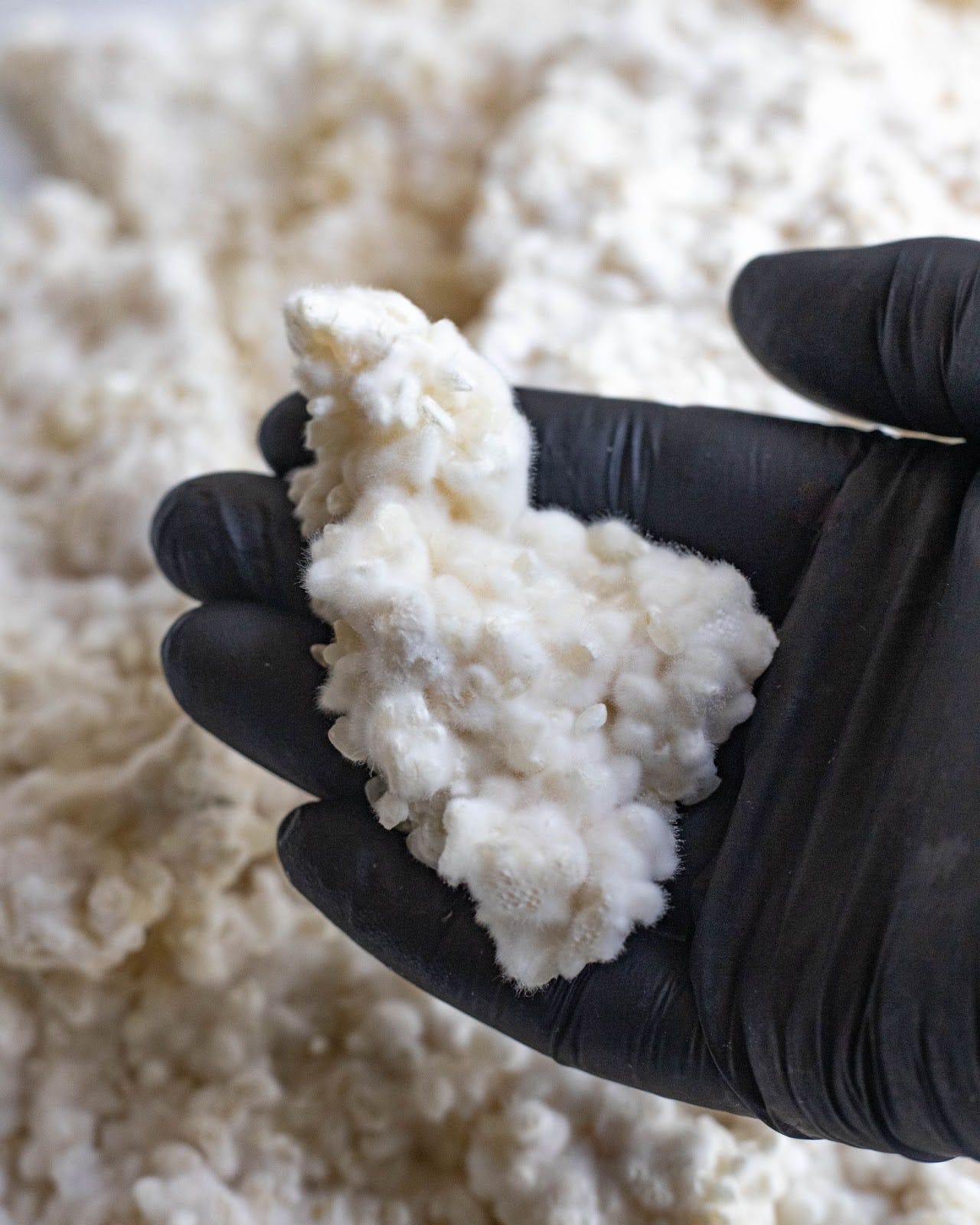
Hour 48 (Day 3, 20:00): It’s koji time! The rice should be covered in a beautiful white mycelium. Use it immediately or store it in the fridge for up to a week. For longer storage, freezing is an option, especially if you plan to make sake.
You may think of those hour marks as a must check period and anything more from it you should judge by yourself if any more checkups or mixing is needed. For example if the koji is overheating for some reason another mixing is needed.
The rice should display the characteristic white mycelium growth without over-sporulating. Once it reaches this stage, the koji can be used or preserved for later use.
Is Your Koji Ready?
You’ll know your koji is ready when:
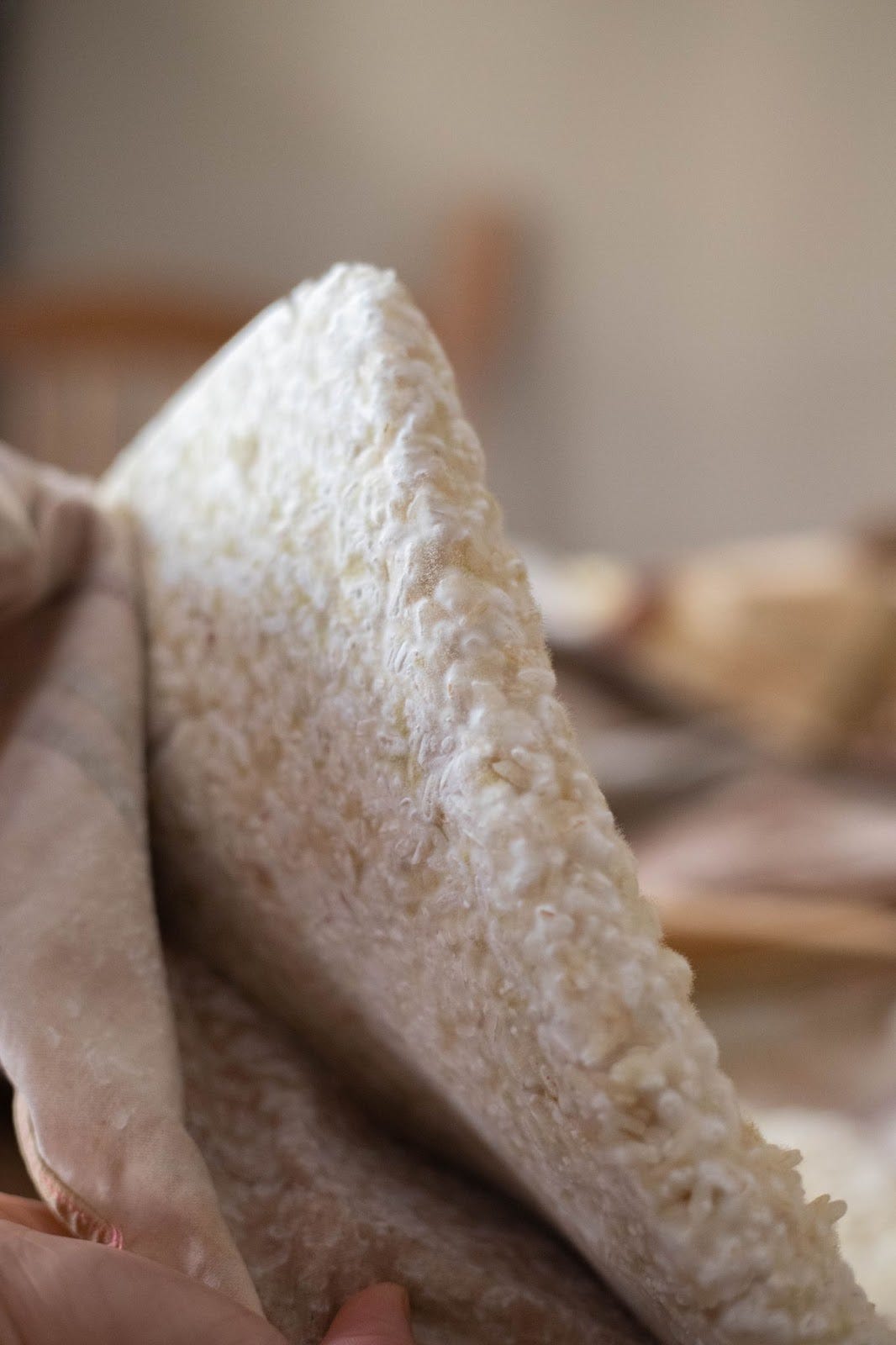
The rice is evenly covered in mycelium. The color depends on the starting spore and if haze is desired for your application (more on this in the advanced series).
It smells sweet and fragrant. The aroma should be distinct, like a cross between mushrooms and freshly baked bread.
Bonus test: Split a rice grain in half—if you see mycelium all the way through, your koji is in great shape. Surface growth is nice, but internal growth means your koji is really thriving.
This guide walks you through a simple, effective method for growing koji at home. In future articles, we’ll dive into advanced techniques, alternative substrates, and the art of getting creative with your koji chamber setup.
Sources:
Murakami, H. Koji Studies (麹学); Japan Brewing Association: Tokyo, 1986.
Yamashita H. Koji Starter and Koji World in Japan. Journal of Fungi. 2021; 7(7):569. https://doi.org/10.3390/jof7070569
務望月. 麹と味噌の品質. 日本釀造協會雜誌 1966, 61 (8), 682–686. https://doi.org/10.6013/jbrewsocjapan1915.61.682.
Yu, A. C. Haze - Japanese Wiki Corpus. https://www.japanesewiki.com/culture/Haze.html
Haze types - Koji Wiki. http://www.kojiwiki.com/index.php/Haze_types
Matsunaga, K.; Furukawa, K.; Hara, S. Effects of Enzyme Activity on the Mycelial Penetration of Rice <I>koji</I>. J. Brew. Soc. Jpn. 2002, 97 (10), 721–726. https://doi.org/10.6013/jbrewsocjapan1988.97.721.
Matsunaga, K.; Furukawa, K.; Hara, S. Effects of the Digestibility of Steamed Rice on the Mycelial Penetration of Rice <I>koji</I>. J. Brew. Soc. Jpn. 2003, 98 (7), 526–529. https://doi.org/10.6013/jbrewsocjapan1988.98.526.
Wisman, A. P.; Tamada, Y.; Hirohata, S.; Gomi, K.; Fukusaki, E.; Shimma, S. Mapping Haze-Komi on Rice Koji Grains Using β-Glucuronidase Expressing Aspergillus Oryzae and Mass Spectrometry Imaging. J. Biosci. Bioeng. 2020, 129 (3), 296–301. https://doi.org/10.1016/j.jbiosc.2019.09.016.
Sudo, S.; Koseki, T.; Kizaki, Y. Factors in the Formation of Haze. J. Brew. Soc. Jpn. 2002, 97 (5), 369–376. https://doi.org/10.6013/jbrewsocjapan1988.97.369.
Tatsurokuro, T.; 京都大学名誉教授栃倉辰六郎編著. 新増補 醤油の科学と技術. (Science and Technology of Soy Sauce); Japan Brewing Association: Tokyo, 2011.
so well explained! I'll start a batch tonight to make some delicious miso
nice clear explanation, and very interesting to see your sources. i do have a question for you: i have made barley koji at home many times, however about 80% of the time i do not get clumping and the haze is not too evident, however the smell is very strong and i have been able to make excellent miso and other amino sauces, shio koji etc. i wonder, do people make too much of a fuss about the haze and clumping or am i doing something wrong which i could improve? ( i did check http://www.kojiwiki.com/index.php/Haze_types but it is for rice and seems to be about sake) many thanks